Henrik Jenkins · 19 September 2026
Tracing Oak Provenance Through Forest Management Practices and Their Influence on Spirit Maturation Cycles
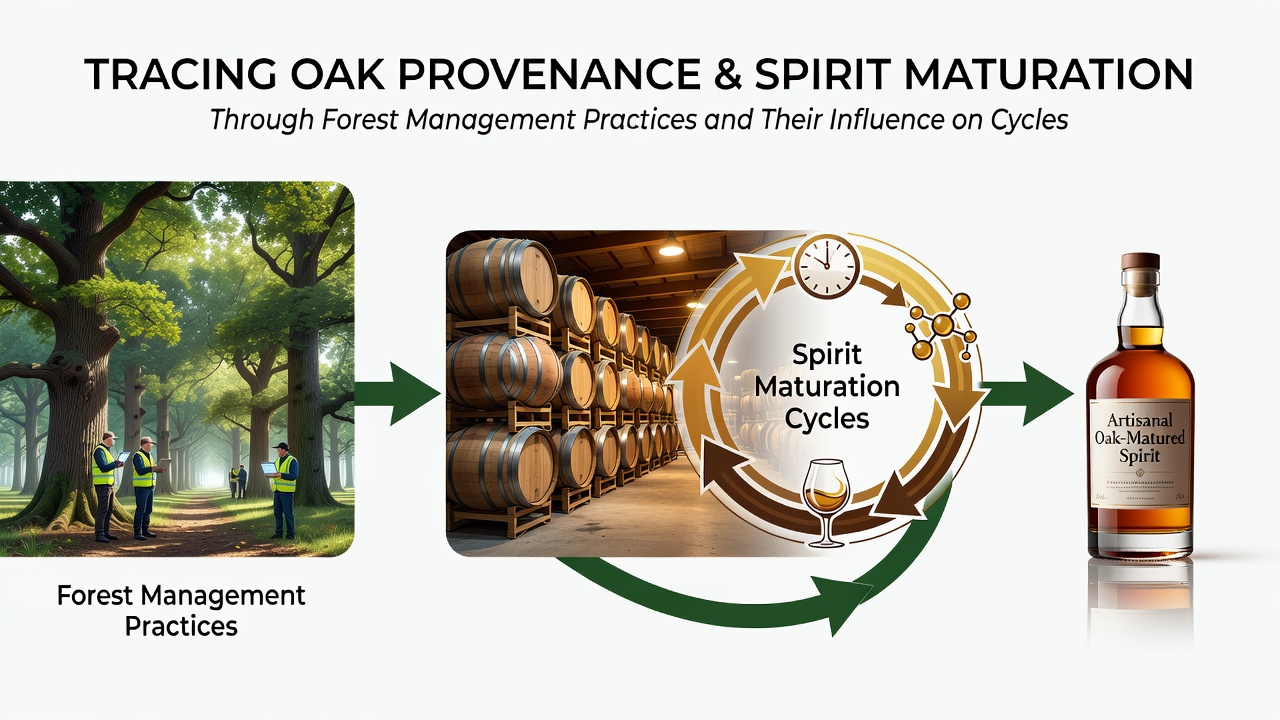
Forest management practices shape the characteristics of oak used in spirit maturation, and provenance tracing methods connect specific stands to barrel performance over time. Researchers track these connections through documented harvesting records, chemical signatures in the wood, and growth ring analysis that reveals environmental conditions during tree development.
Regional Forest Management Approaches
Management techniques vary by region yet follow principles that maintain timber quality while supporting regeneration cycles. In American oak forests, selective thinning removes weaker trees to concentrate resources on straight-grained specimens destined for cooperage, and this approach produces wood with consistent density that influences oxygen exchange during aging. European operations in France and elsewhere apply similar selective cuts alongside controlled understory management to limit competition for nutrients, which results in slower growth rates and tighter grain structures in the harvested logs.
Data from long-term monitoring programs shows that these practices affect lignin and tannin concentrations, elements that later interact with spirits during barrel storage. Stands managed under sustained-yield models yield oak that releases compounds at predictable rates, whereas unmanaged or over-harvested areas produce more variable material that can accelerate or mute certain maturation reactions.
Methods for Establishing Oak Provenance
Tracing begins with harvest documentation that records stand location, elevation, and soil type, then extends to laboratory verification. Stable isotope ratios in the wood cellulose provide geographic fingerprints because carbon and oxygen signatures reflect local climate and water sources during growth. DNA markers further distinguish between species and even regional populations when reference databases contain sufficient samples from known stands.
One study conducted across multiple sites demonstrated that combining ring-width chronologies with trace element analysis correctly assigned over 85 percent of tested staves to their forest of origin. Cooperages and distillers use these combined datasets to verify supplier claims and to select wood lots expected to deliver consistent extraction profiles during the first five to ten years of spirit contact.

Effects on Spirit Maturation Cycles
Oak from tightly managed, slow-growth forests typically exhibits lower porosity, which moderates evaporation losses and extends the period over which tannins integrate with the spirit. Faster-grown wood from less intensively managed stands allows greater oxygen ingress early in the cycle, promoting quicker color development and ester formation but also increasing the risk of over-extraction if aging continues beyond target windows. Research indicates that these differences become measurable within the first eighteen months and continue to diverge through year seven or eight.
Maturation schedules are adjusted accordingly. Distillers working with high-tannin, tight-grain oak often schedule longer resting periods or use larger cask sizes to balance extraction, whereas lots from more open-grained sources may enter finishing casks sooner. Records maintained by aging facilities show that provenance-linked selection reduces batch variability and supports more precise forecasting of final spirit profiles.
Integration of Management Data with Industry Practices
Barrel producers now incorporate forest inventory data into production planning so that stave lots carry traceable histories from seedling to seasoning yard. This information helps predict how each batch will behave during toasting and charring, steps that further modify wood chemistry before the barrel meets the spirit. According to reports compiled by the US Forest Service, stands under active management plans maintain higher proportions of suitable cooperage-grade timber than those left to natural succession alone.
Additional verification comes from academic collaborations that publish periodic updates on wood chemistry across provenance zones. These datasets allow maturation teams to model expected tannin release curves and to adjust warehouse conditions such as temperature cycling or humidity to optimize outcomes for each wood source.
Conclusion
Forest management directly determines the physical and chemical properties of oak that later govern spirit maturation, and provenance tracing supplies the factual link between stand practices and barrel performance. Documented harvesting records, isotope analysis, and growth-ring data together enable accurate assignment of wood to origin, while maturation studies quantify how those origins translate into extraction rates, oxygen transfer, and flavor development timelines. Industry adoption of these methods continues to refine selection processes and supports more consistent aging results across production cycles.