Zoe Bauer · 5 September 2026
The Science of Micro-Oxygenation in Wooden Vessels and Its Effects on Product Development
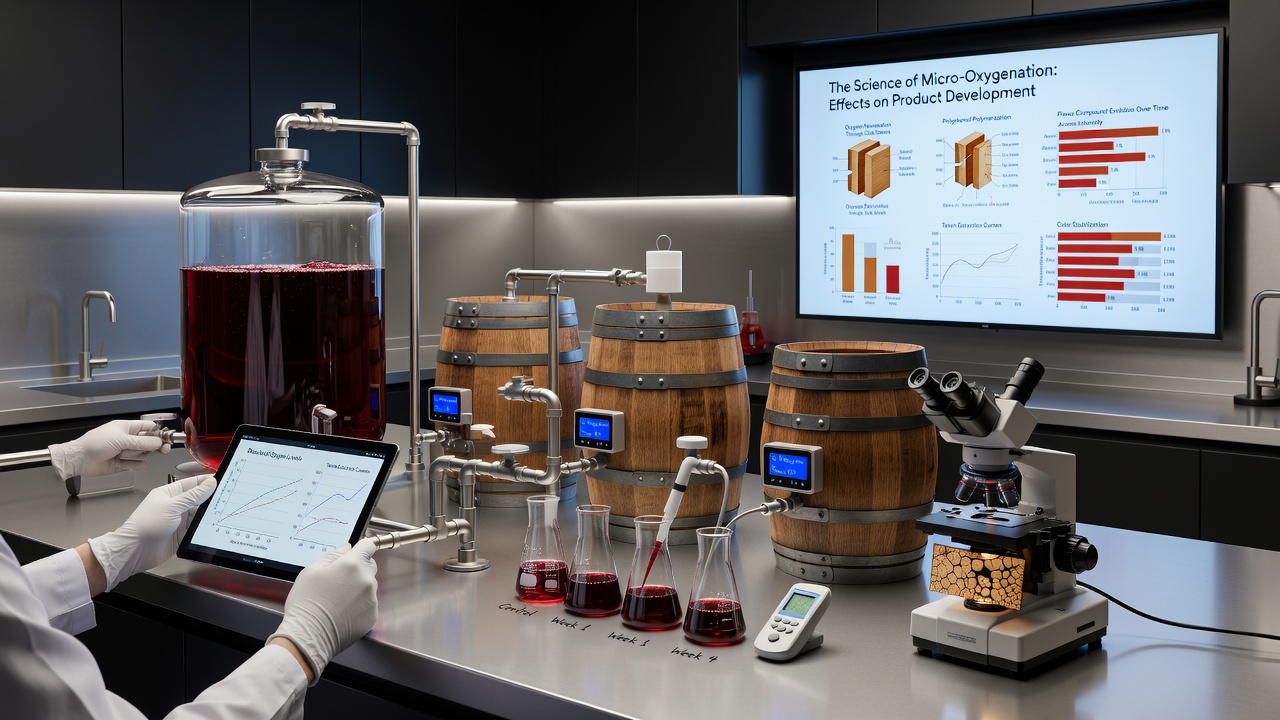
Micro-oxygenation refers to the deliberate addition of minute quantities of oxygen to liquids stored in wooden vessels, and this process plays a central role in how products like wine and spirits develop over time. Wooden vessels allow gradual oxygen transfer through their porous structure, while controlled systems supplement that natural permeability with precise dosing equipment. Researchers track oxygen levels in parts per million because even slight variations influence oxidation rates and molecular interactions during aging.
Mechanisms of Oxygen Transfer in Wood
Wood species such as oak, acacia, and chestnut exhibit different permeability rates based on grain density, tannin content, and stave thickness. Oxygen diffuses through the wood matrix at rates that depend on temperature, humidity, and the liquid's surface area inside the vessel. Studies show that French oak typically permits slower transfer compared to American oak under identical conditions, and vessel size further modulates total oxygen exposure because smaller barrels present higher surface-to-volume ratios.
Chemical Interactions During Controlled Oxygenation
Phenolic compounds in the liquid react with introduced oxygen to form acetaldehyde, which then bridges anthocyanins and tannins into more stable color structures. This reaction sequence reduces astringency while preserving hue intensity over months of storage. Polysaccharides extracted from the wood interact with these oxidized phenolics, and the resulting complexes contribute to mouthfeel attributes that develop progressively. Data from multiple trials indicate that oxygen dosing at 1 to 5 milliliters per liter per month produces measurable shifts in polymerization without triggering excessive browning.
Effects on Product Stability and Sensory Profile
Controlled micro-oxygenation accelerates the softening of aggressive tannins in young reds, and it simultaneously lowers the risk of reductive off-aromas that form under completely anaerobic conditions. Volatile compounds evolve differently when oxygen is supplied steadily rather than in sporadic bursts, leading to integrated aroma layers instead of isolated peaks. Figures from long-term monitoring reveal that wines aged with micro-oxygenation retain higher levels of free sulfur dioxide at equivalent total SO2 additions, because fewer oxidation events consume the protective antioxidant.
Industry Applications and Measurement Techniques
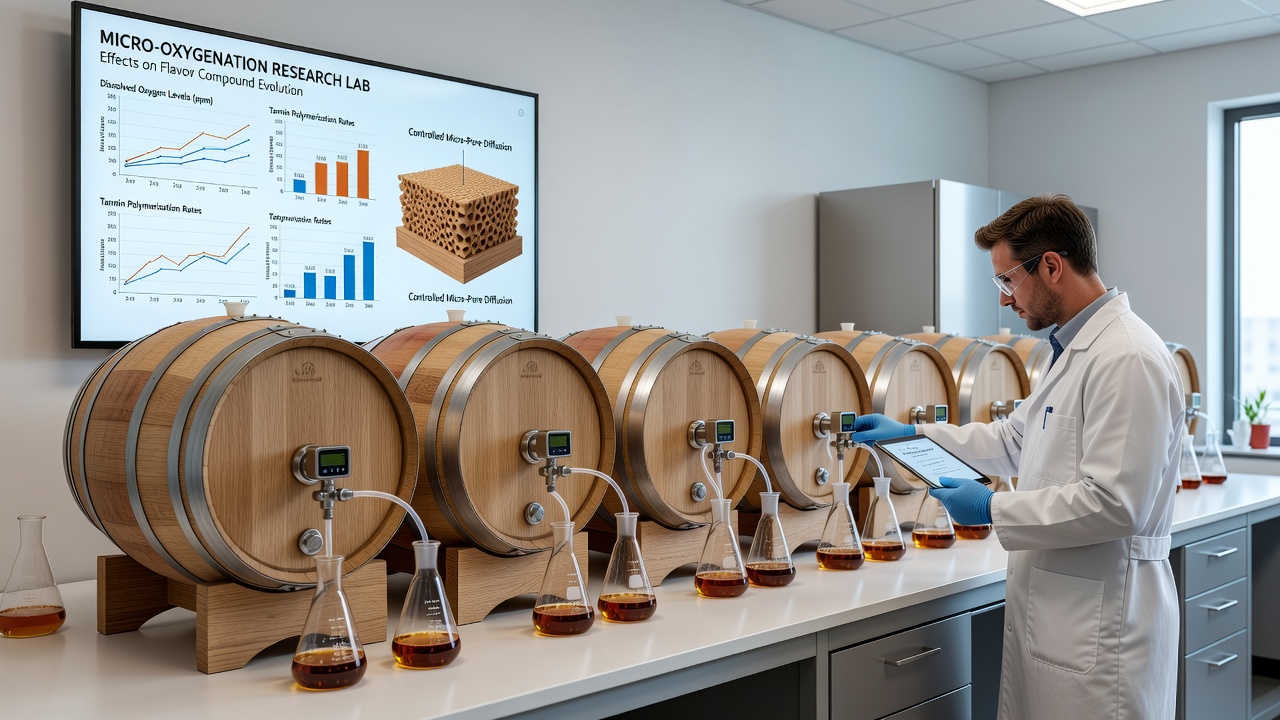
Producers in regions across Australia and North America integrate micro-oxygenation systems into both new and used wooden vessels to achieve consistent outcomes across vintages. Inline sensors and periodic sampling allow operators to adjust dosing schedules based on real-time dissolved oxygen readings and the target chemical endpoints. Equipment calibration remains essential because over-dosing quickly shifts the balance toward premature aging markers, whereas under-dosing leaves reductive notes intact. According to data published by the Australian Wine Research Institute, optimized micro-oxygenation protocols correlate with reduced incidence of Brettanomyces-related faults in barrel-aged reds.
Comparative Studies Across Vessel Types
Traditional barrels differ from large wooden vats and modern tank-with-wood-chip hybrids in total oxygen ingress patterns. Large-format vessels deliver slower cumulative exposure, so micro-oxygenation becomes a tool to mimic the chemical trajectory of smaller barrels. Research conducted at the University of California, Davis demonstrates that micro-oxygenation applied to 5000-liter vats produces anthocyanin-tannin adducts at rates comparable to those observed in 225-liter barrels over shorter timeframes. Temperature control during these trials proves critical, because each 10-degree Celsius rise roughly doubles oxygen reaction kinetics within the liquid matrix.
Conclusion
The interplay between wooden vessel permeability and supplemental micro-oxygenation continues to shape product development pathways across the beverage industry. Precise measurement of oxygen transfer, combined with understanding of phenolic and polysaccharide reactions, enables producers to guide aging outcomes with greater repeatability. Ongoing monitoring and region-specific calibration maintain these effects while respecting the natural variability inherent in wood as a container material.