Henrik Jenkins · 17 October 2026
The Overlooked Influence of Stave Bending Techniques on Tannin Release Patterns in Custom Cooperage for Aged Spirits
Understanding Stave Bending in Cooperage
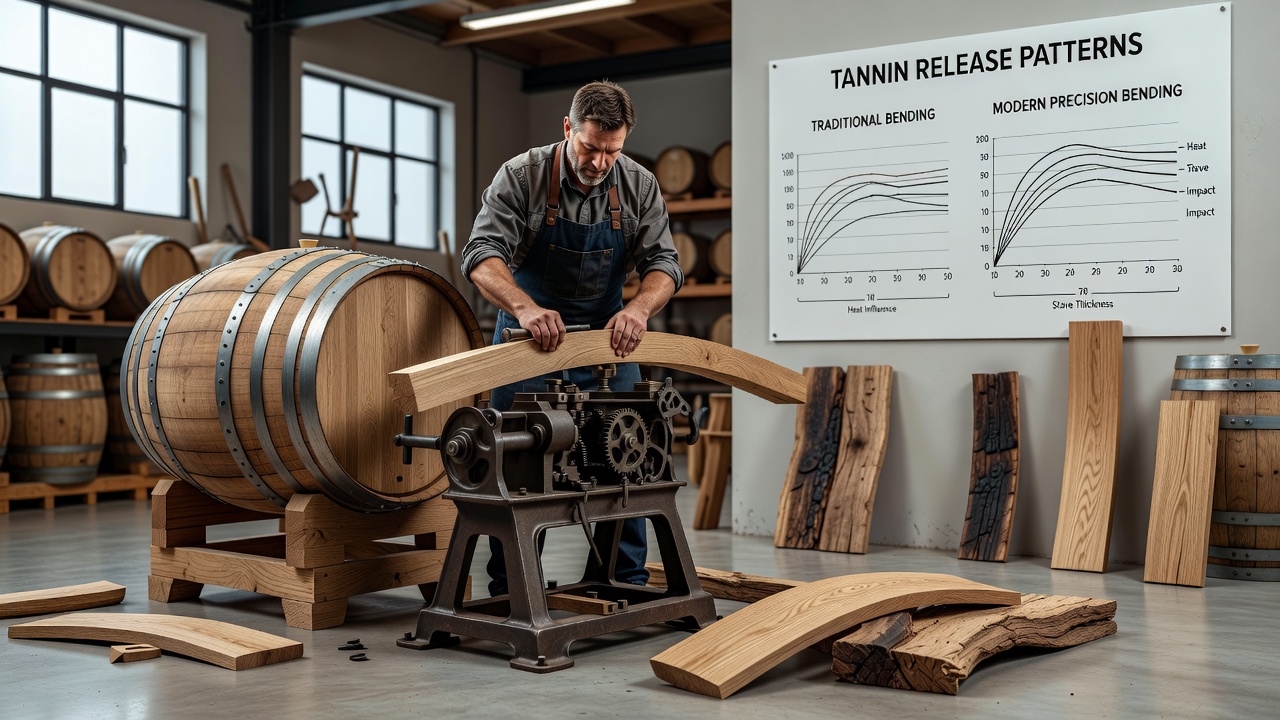
Stave bending techniques apply controlled heat and moisture to oak planks so they form the curved walls of barrels without splitting, and these methods alter the wood's cellular structure at the same time. Cooperages select fire, steam, or water processes based on the desired barrel specifications, since each approach changes how tannins move from the wood into aging spirits. Traditional fire bending heats staves over open flames until they become pliable, while steam bending uses pressurized vapor to soften lignin bonds, and water bending soaks the wood before mechanical shaping occurs.
Data from industry reports indicate that fire bending reaches temperatures between 200 and 250 degrees Celsius along the inner surface, which promotes partial charring and breaks down some surface tannins into simpler compounds. Steam methods keep temperatures lower around 120 degrees Celsius yet penetrate deeper into the wood, resulting in more uniform tannin modification across the stave thickness. Observers note that these differences create distinct release timelines once the barrels hold whiskey, brandy, or other aged products.
Tannin Chemistry and Wood Interaction
Tannins in oak belong to the ellagitannin family, and they contribute astringency along with structural complexity to spirits during maturation. Bending processes influence tannin solubility because heat causes hydrolysis or polymerization reactions that either increase or decrease the compounds available for extraction. Research from forestry studies shows that prolonged high-heat exposure during fire bending reduces extractable tannin levels by up to 30 percent compared with untreated oak, whereas steam bending preserves more of the original tannin profile while softening the wood matrix for easier liquid penetration.
Custom cooperage operations adjust bending parameters to target specific release patterns, such as slower initial tannin migration that allows vanillin and other congeners to develop first. In October 2026 the European Forest Research Network plans to release updated models on how regional oak varieties respond to these bending variations, which will help producers refine barrel specifications for consistent product outcomes across batches.
Effects on Spirit Maturation Cycles
Barrels formed through different bending techniques release tannins at varying rates throughout the aging period, and this timing affects color development, mouthfeel, and flavor balance in the final spirit. Fire-bent barrels often deliver an early surge of modified tannins that integrate quickly with ethanol, whereas steam-bent barrels show steadier extraction over multiple years. Studies conducted by Canadian wood science laboratories demonstrate that water-bent staves produce intermediate patterns, with tannins emerging gradually after the first six months of contact.
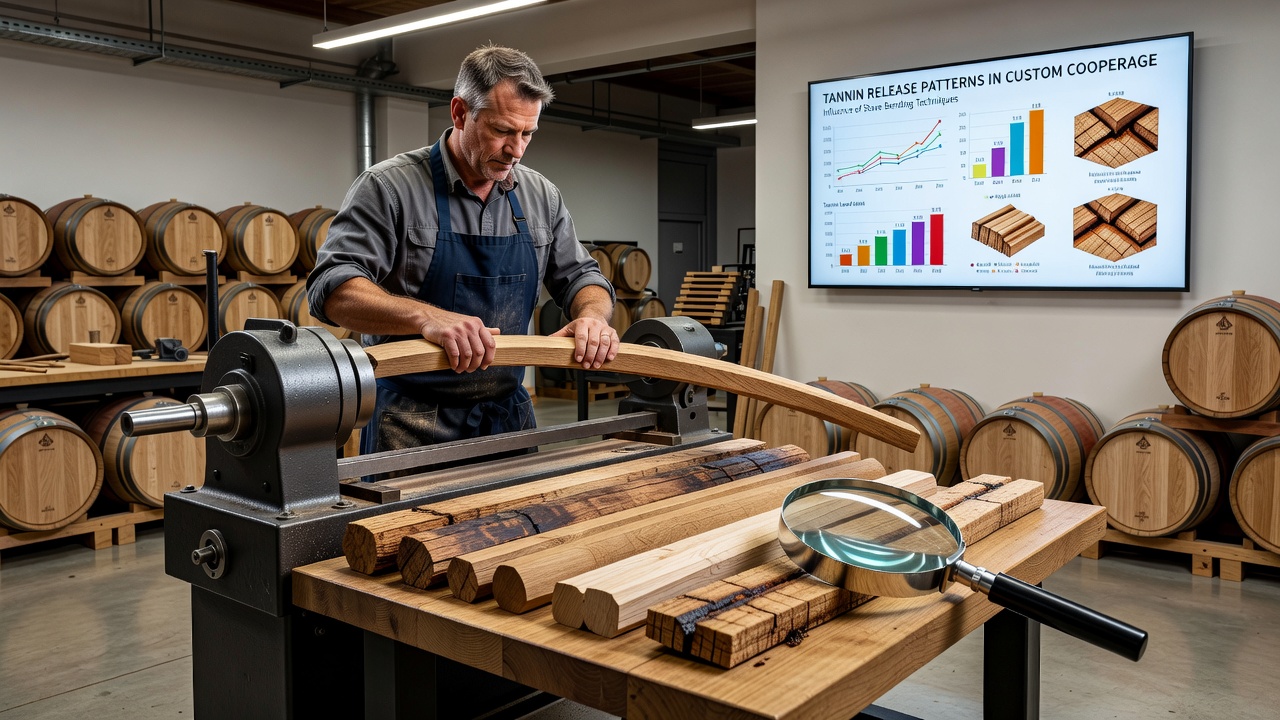
Producers in the United States track these patterns through periodic sampling, and the Alcohol and Tobacco Tax and Trade Bureau guidelines require documentation of barrel construction methods when verifying aging claims. One cooperage in Kentucky documented that switching from fire to steam bending extended the period of peak tannin contribution by nine months in bourbon barrels, allowing more controlled astringency management. Those measurements align with findings from Australian wine research institutes that examined similar techniques applied to fortified spirit barrels.
Custom Cooperage Practices and Regional Variations
Custom cooperages combine bending methods with toasting levels and stave selection to create barrels suited for particular spirit styles, and this customization directly shapes tannin dynamics. French oak processed via steam bending supplies higher initial tannin loads than American oak subjected to fire bending, according to comparative data compiled by the International Oak Research Group. Producers match these characteristics to product goals, such as robust tannin support for long-aged single malts or milder profiles for younger rums.
Seasonal factors also interact with bending outcomes because humidity during stave storage influences how much moisture remains before the bending step, which in turn modulates tannin solubility once the barrel fills. Equipment upgrades in modern cooperages now allow precise temperature profiling during bending, and records from several facilities show reduced batch-to-batch variation in tannin release after these controls were introduced.
Analytical Methods and Industry Data
Laboratories measure tannin release through spectrophotometry and high-performance liquid chromatography on spirit samples drawn at regular intervals, and these techniques reveal how bending choices shift extraction curves. Figures compiled by the Wine and Spirits Research Institute in South Africa indicate that steam-bent barrels maintain tannin concentrations within a narrower range during the first two years compared with fire-bent equivalents. Such consistency supports predictable sensory development and helps blenders maintain product specifications across large production runs.
Supply chain documentation now includes bending method details alongside forest origin and drying duration, since traceability systems link these factors to final tannin profiles. Cooperages that publish their process parameters allow distillers to select barrels with greater certainty about maturation behavior, and this practice has grown among facilities supplying both craft and large-scale operations.
Conclusion
Stave bending techniques remain a foundational yet frequently under-examined element in custom cooperage that governs tannin release patterns during spirit aging. Variations in heat application and moisture management produce measurable differences in extraction speed and compound stability, which in turn influence the sensory and chemical evolution of aged products. Ongoing research scheduled for release in October 2026 will provide additional quantitative models that connect bending parameters to specific tannin timelines, supporting more precise barrel selection across global production regions.