Sofia Schmid · 3 October 2026
Seasonal Humidity Shifts and Their Effects on Inventory Tracking Systems in Specialized Storage Operations
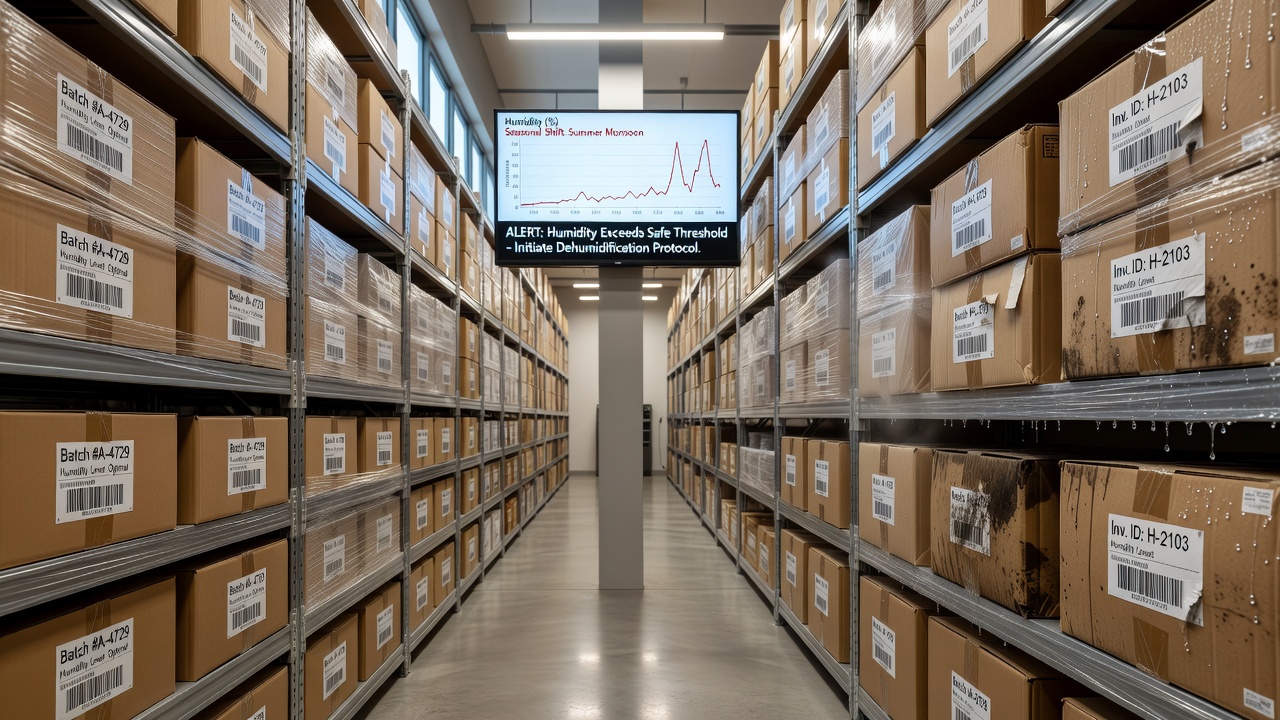
Seasonal humidity shifts create measurable challenges for inventory tracking systems in specialized storage operations where precise environmental control supports product integrity over extended periods, and facilities handling barrels or other sensitive materials must account for moisture fluctuations that vary by region and time of year. Data from monitoring stations indicate that relative humidity levels often rise sharply during summer months in temperate climates while dropping in winter, which produces condensation risks and material expansion that interfere with electronic components and labeling methods used in tracking.
How Humidity Cycles Disrupt Sensor Accuracy
Inventory systems rely on RFID tags, barcode scanners, and wireless sensors that transmit location and condition data, yet elevated moisture levels cause signal attenuation when water vapor absorbs radio frequencies in the 860-960 MHz range commonly used for UHF RFID. Research from facilities in humid subtropical zones shows error rates in tag reads increasing by up to 18 percent during peak summer humidity periods compared with drier seasons, and this pattern holds across multiple storage sites according to aggregated operational logs. Operators note that corrosion on metal contacts within sensor housings accelerates when dew points remain high for consecutive weeks, which leads to intermittent failures that require manual verification and increase labor hours.
Material Degradation in Tracking Hardware
Paper-based labels and adhesive-backed tags absorb ambient moisture, which causes curling, ink bleeding, and delamination from container surfaces, and this effect compounds in storage areas with limited air circulation. Studies conducted at barrel aging facilities demonstrate that label failure rates climb during transitional months when humidity swings exceed 30 percentage points within a 48-hour window, prompting facilities to adopt synthetic substrates or laser-etched identifiers that resist water uptake. Electronic enclosures rated IP65 still experience internal condensation when external temperatures drop faster than internal air can equalize, and maintenance records from October 2026 at several North American sites recorded a spike in sensor recalibrations tied directly to these overnight humidity drops.
Regional Patterns and Data from Monitoring Networks
Climate records compiled by the National Oceanic and Atmospheric Administration reveal that coastal storage operations encounter prolonged high-humidity episodes lasting weeks longer than inland sites, which extends the window during which tracking systems operate outside optimal parameters. In contrast, continental climates produce rapid desiccation in winter that dries out elastomeric seals around cable entries and creates pathways for dust alongside the next humidity rise. Facilities in Australia report similar seasonal effects tracked through the Bureau of Meteorology network, where summer humidity peaks coincide with increased recalibration needs for laser scanners used in high-rack inventory audits.

Integration of environmental compensation algorithms into inventory software has become standard practice at larger operations, and these algorithms adjust signal thresholds based on real-time hygrometer input to maintain read reliability. Yet the underlying hardware remains vulnerable when power fluctuations accompany severe weather events that often cluster around seasonal transitions. European Environment Agency reports document parallel findings across EU member states, where humidity-driven downtime in automated guided vehicles used for pallet tracking averaged 12 additional hours per facility during autumn months between 2023 and 2025.
Operational Adjustments and System Redundancies
Storage managers implement redundant tracking methods such as dual-tag configurations and periodic visual audits to offset humidity-induced discrepancies, and these practices reduce cumulative inventory variance to under 0.5 percent in audited facilities. Wireless mesh networks designed with humidity-rated nodes demonstrate greater resilience because alternate routing paths bypass individual sensors affected by localized condensation. Training programs emphasize recognition of early indicators like fluctuating RSSI values that precede outright tag failure, allowing preemptive replacement before peak seasonal stress arrives. Data logs from specialized operations show that facilities applying desiccant packs inside control cabinets experienced 22 percent fewer humidity-related service calls over a three-year observation window.
Conclusion
Seasonal humidity shifts continue to influence the reliability of inventory tracking systems in specialized storage operations through direct effects on electronics, labels, and signal propagation. Facilities that monitor local climate data and incorporate material and algorithmic adaptations maintain higher data integrity across annual cycles. Ongoing collection of operational metrics through networks such as those maintained by NOAA and the European Environment Agency supports further refinement of hardware specifications tailored to regional humidity profiles.